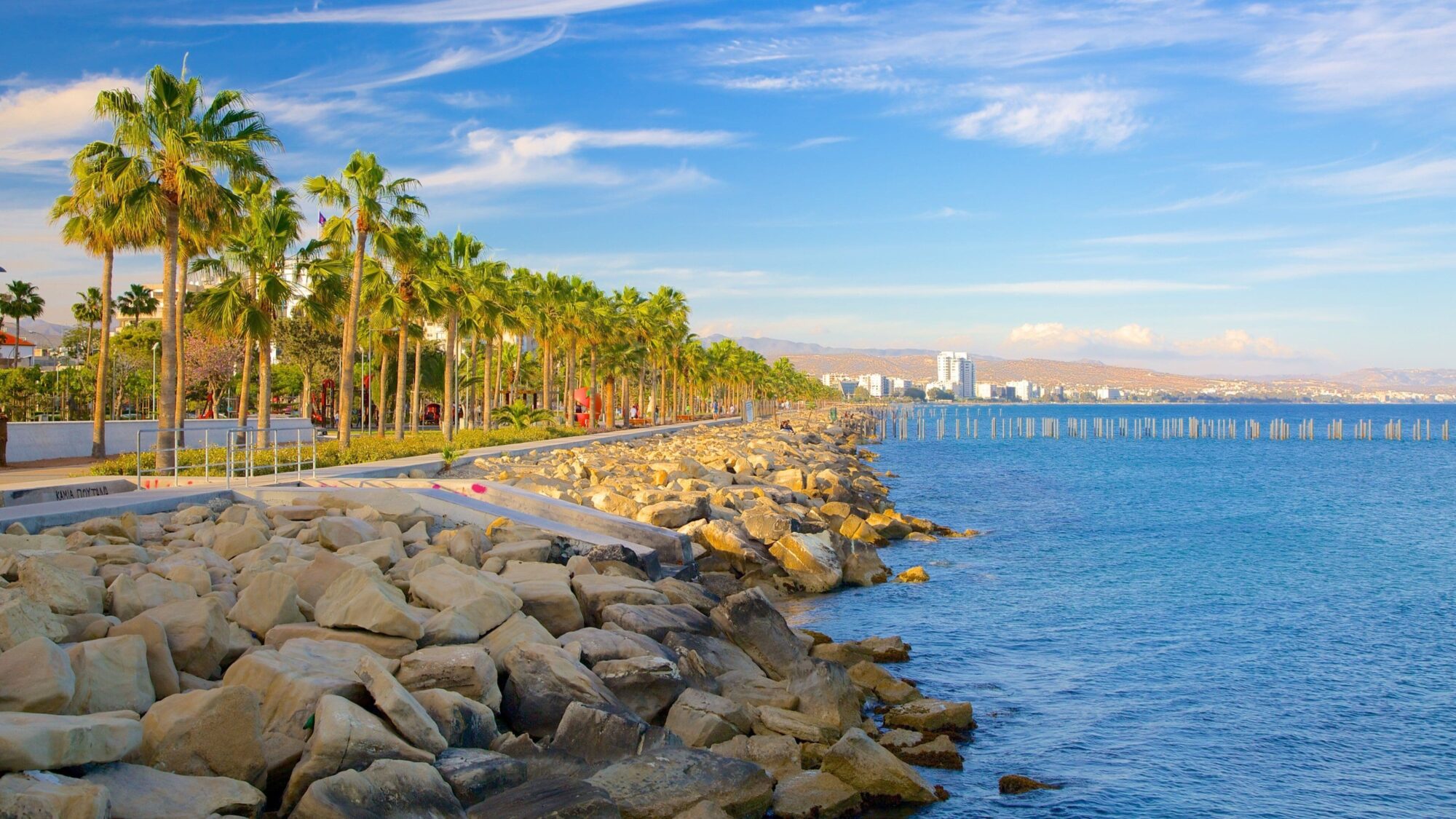
Air quality Limassol is generally moderate to good throughout most of the year, with occasional short-term spikes caused by Saharan dust and urban traffic. For residents, expats, families with children, and travelers planning outdoor activities, understanding when pollution levels rise — and why — makes a real difference to daily comfort and health.
Limassol combines coastal sea breezes with dense urban development, a busy port, and heavy traffic corridors such as Makariou III Avenue and the Limassol–Nicosia highway. These factors influence air conditions differently depending on season and wind direction. Cyprus as a whole benefits from its Mediterranean climate, but it is also exposed to dust transported from North Africa several times per year.
This guide explains how air quality is measured in Limassol, what the typical pollution levels are across the year, how they compare to other cities in Cyprus, and what residents and visitors can do to protect themselves during high-dust days. You will also find official data sources, practical tips, and seasonal patterns to help you plan daily life or your trip more comfortably.
- Current Air Quality Levels in Limassol
- Seasonal Air Pollution Patterns in Cyprus
- Main Sources of Air Pollution in Limassol
- Health Impact and Sensitive Groups
- How Air Quality Is Monitored in Cyprus
- Practical Tips for Residents and Visitors
- Frequently Asked Questions
Current Air Quality Levels in Limassol
On most non-dust days, Limassol records PM2.5 and PM10 levels within European Union recommended limits, especially near the coastline where sea breezes disperse pollutants. However, during Saharan dust episodes, particulate matter can exceed safe thresholds for several hours or even days.
According to the Cyprus Department of Labour Inspection (Air Quality Monitoring Network), typical urban background PM10 concentrations in coastal cities range between 20–40 µg/m³ on normal days, but may temporarily rise above 100 µg/m³ during dust events. These peaks usually occur in spring and autumn.
Understanding the Air Quality Index (AQI)
The Air Quality Index translates pollution data into easy-to-read categories:
- 0–50 (Good): Air quality poses little or no risk.
- 51–100 (Moderate): Acceptable for most people.
- 101–150 (Unhealthy for Sensitive Groups): Children, elderly, and asthma sufferers should limit prolonged outdoor exertion.
- 151+ (Unhealthy): General population may experience effects.
In Limassol, AQI typically remains in the “Good” to “Moderate” range outside dust events. Coastal neighborhoods such as Germasogeia and Agios Tychonas often experience slightly better conditions compared to inland traffic-heavy zones.
Where Pollution Is Higher in the City
- Near Limassol Port and industrial areas west of the city
- Along major roads such as Franklin Roosevelt Avenue
- Busy intersections in Mesa Geitonia
- Construction-heavy areas in Zakaki
Sea-facing promenades like Molos generally feel fresher thanks to airflow from the Mediterranean.
Seasonal Air Pollution Patterns in Cyprus
Air conditions in Limassol vary more by season than by daily traffic patterns. The Mediterranean climate plays a crucial role in pollutant dispersion and concentration.
Winter (December–February)
Cooler temperatures reduce dust transport, but localized pollution can increase due to:
- Domestic heating (especially wood-burning fireplaces)
- Temperature inversions trapping pollutants
- Lower wind speeds on certain days
Rainfall helps clear particles from the air. Limassol averages 8–10 rainy days per month in winter, improving conditions after storms.
Spring (March–May)
This is peak Saharan dust season. Fine particles travel from North Africa across the Mediterranean, turning skies hazy and sometimes orange. Visibility drops, and outdoor surfaces accumulate fine sand.
Dust alerts are typically issued by the Department of Labour Inspection, advising schools and vulnerable individuals to reduce outdoor activity.
Summer (June–September)
Summer brings strong sunlight and minimal rainfall. While dust events are less frequent than in spring, ozone (O₃) levels can rise during heatwaves. Afternoon sea breezes usually improve air circulation in coastal Limassol.
Autumn (October–November)
A second, shorter dust period may occur. Early autumn can combine heat, humidity, and suspended particles before the first major rains cleanse the atmosphere.
Main Sources of Air Pollution in Limassol
Air pollution in Limassol comes from both local and transboundary sources. Unlike large industrial cities in Europe, the majority of extreme readings are linked to natural dust transport rather than permanent smog.
1. Saharan Dust (Transboundary)
Fine desert particles are the single largest contributor to temporary spikes. These events are natural but can significantly raise PM10 and PM2.5 concentrations.
2. Road Traffic
Private car usage is high in Cyprus. Public transport infrastructure is limited compared to mainland Europe, leading to congestion during peak hours (07:30–09:00 and 16:30–18:30). Diesel vehicles and older cars contribute disproportionately to emissions.
3. Port and Shipping Activity
The Port of Limassol is the largest maritime hub in Cyprus. Ship emissions and logistics operations contribute to localized pollution in western districts.
4. Construction Boom
High-rise developments along the seafront and in areas such as Zakaki generate dust, especially during dry months.
🚗 Car Rental in Limassol
Want to explore Cyprus without limits? Rent a car at the best price and travel comfortably!
Renting a car can help you choose accommodation in less congested neighborhoods such as Agios Tychonas or Erimi, where air circulation is better and traffic density lower.
Health Impact and Sensitive Groups
Short-term exposure to elevated particulate matter may cause throat irritation, coughing, eye discomfort, and breathing difficulties. Individuals with asthma or chronic respiratory diseases should monitor daily AQI updates carefully.
According to the World Health Organization, fine particulate matter (PM2.5) is linked to cardiovascular and respiratory diseases. While Cyprus does not experience chronic smog like some major European capitals, episodic dust exposure can temporarily exceed WHO guideline values.
Groups That Should Take Extra Care
- Children under 12
- Adults over 65
- People with asthma or COPD
- Pregnant women
- Outdoor workers
Local Expert Tip
On high-dust days, choose early morning walks along the Molos promenade or near Dasoudi Beach in Germasogeia, where sea breezes reduce particle concentration compared to inland streets like Spyrou Kyprianou Avenue.
How Air Quality Is Monitored in Cyprus
Cyprus operates a national air monitoring network managed by the Department of Labour Inspection under the Ministry of Labour and Social Insurance. Stations measure:
- PM10
- PM2.5
- Nitrogen dioxide (NO₂)
- Ozone (O₃)
- Sulphur dioxide (SO₂)
Data is published online in near real-time. Alerts are issued when thresholds are exceeded, especially during Saharan dust intrusions.
Monitoring Locations in and Around Limassol
| Station Name | Area | Type | Main Pollutants Measured |
|---|---|---|---|
| Limassol Traffic Station | City Center | Urban Traffic | PM10, NO₂, O₃ |
| Limassol Industrial Station | West Limassol | Industrial | PM10, SO₂ |
| Agios Tychonas | East Limassol | Suburban | PM2.5, O₃ |
| Zygi | Outside City | Regional Background | PM10, PM2.5 |
According to the Cyprus Statistical Service, environmental monitoring has expanded over the past decade to align with European Union air quality directives.
Practical Tips for Residents and Visitors
Daily life in Limassol rarely needs major adjustments due to air pollution, but simple habits improve comfort during dust periods.
During Saharan Dust Events
- Limit intense outdoor exercise.
- Keep windows closed during peak dust hours.
- Use air conditioning with internal circulation mode.
- Consider indoor gyms such as Columbia Beach Gym or City of Dreams fitness facilities.
At Home
- Install a HEPA air purifier (quality units cost €120–€350 in Cyprus).
- Wet-mop floors instead of dry sweeping.
- Wash balconies after dust settles.
Choosing Accommodation
Coastal apartments in Germasogeia, Agios Tychonas, or near the Amathus area generally benefit from better ventilation compared to dense central zones.
🏨 Book a Hotel in Limassol
Find the perfect accommodation – from budget apartments to luxury resorts at the best rates.
Short-term visitors staying more than a few days may prefer sea-facing hotels where airflow improves comfort during warmer months.
Getting Around
Using public buses operated by EMEL costs around €1.50 per single ticket. While the system is improving, most residents rely on private cars. Cycling along the coastal path is pleasant outside high-dust days.
✈ Find the Best Flights to Cyprus
Planning your trip to Limassol? Get the best deals on flights and save money on travel!
Travelers arriving at Larnaca Airport (about 65 km from Limassol) should check air quality forecasts if planning outdoor excursions immediately after landing.
Frequently Asked Questions
Is air quality in Limassol safe for children?
Most days fall within moderate or good AQI ranges, which are generally safe for children. During Saharan dust episodes, outdoor activities at schools may be reduced. Parents can check official monitoring websites before planning sports or beach outings.
How often does Saharan dust affect Limassol?
Dust events typically occur several times per year, mainly in spring and occasionally in autumn. Most episodes last between one and three days. Severe events exceeding EU limits are relatively infrequent but noticeable.
Which area of Limassol has the cleanest air?
Coastal and eastern suburbs such as Agios Tychonas and parts of Germasogeia usually benefit from stronger sea breezes. Areas near the port and heavy traffic corridors may experience slightly higher localized pollution.
Where can I check real-time air quality data?
The Cyprus Department of Labour Inspection provides real-time measurements from monitoring stations across the island. Several international AQI apps also display Limassol readings based on official data feeds.
Is Limassol more polluted than other cities in Cyprus?
Limassol and Nicosia occasionally record higher traffic-related emissions due to urban density. However, all Cypriot cities are similarly affected by Saharan dust since it is a regional phenomenon rather than a local one.


